Six Hours on Your Feet Isn't Exercise: What Standing Desks Actually Do to Your Body
The standing desk arrived in American offices like a rescue mission. Sedentary work was killing us, the headlines said, and the answer was simple: stand up. Companies bought them by the fleet. Wellness committees bragged about them in onboarding emails. And millions of workers quietly discovered that six hours on their feet felt... not great.
Turns out the science was always more complicated than the marketing. Let's look at what standing desks really do — and what to do instead if you're stuck at a desk all day.
The Calorie Myth That Won't Die
Start with the claim everyone's heard: standing burns way more calories than sitting.
It doesn't. Not meaningfully.
Studies comparing the two put the difference at roughly 8 to 10 calories per hour. That's about half an almond. Over a full workday, standing might net you an extra 50 to 80 calories — less than a granola bar, and nowhere near enough to offset the metabolic slowdown that comes with being sedentary in the first place.
The reason is biomechanics. Standing is a static posture. Once you're upright, your legs lock in, your muscles go quiet, and your energy expenditure flatlines just above sitting levels. Your body treats standing like sitting's slightly more ambitious cousin — not like movement.
The Vein Problem Nobody Mentions
Here's where it gets less comfortable. Prolonged standing isn't neutral for your body — for some people, it's an occupational hazard.
Occupational health researchers have studied workers who stand for most of the day — hair stylists, retail staff, surgeons — for decades. The findings consistently link long static standing with:
- Varicose and spider veins. Hours of upright posture increases pressure in the leg veins, and over time that contributes to venous insufficiency — blood pooling in the lower legs.
- Lower back pain and foot discomfort. Static standing loads the lumbar spine differently than sitting, but it still loads it. Co-contracted muscles never get a break.
- Joint compression and fatigue. Studies on prolonged standing show measurable declines in reaction time and reports of leg fatigue that look suspiciously like what we'd call an occupational injury in any other context.
The 2018 consensus statement from the British expert panel on workplace sedentary behavior said it plainly: neither prolonged sitting nor prolonged standing is ideal. The goal isn't swapping one static posture for another. It's postural variety and actual movement.
Which is exactly what most standing desk setups fail to deliver.
So Is the Standing Desk Useless?
Not quite. There are a few honest wins:
- Blood sugar. Some research shows standing after meals blunts post-meal glucose spikes modestly — though walking beats it by a mile.
- Breaks in sedentary time. Alternating sitting and standing does break up uninterrupted sitting, which is where the real metabolic harm lives.
- Subjective energy. Many people report feeling less stiff and more alert when they alternate postures.
The problem isn't standing. The problem is standing still for hours and calling it health behavior.
Movement Snacking: The Protocol for People Who Can't Leave Their Desk
If you're chained to a workstation — support tickets, calls, spreadsheets — you need movement that fits inside your desk footprint. Here's a realistic protocol built around what the evidence says matters: frequent, brief muscle contractions throughout the day.
Every 30 minutes (60–90 seconds):
- Stand up and sit back down, twice. That's it. Sit-to-stand transitions are the single highest-value movement you can do at a desk.
Every hour (2–3 minutes):
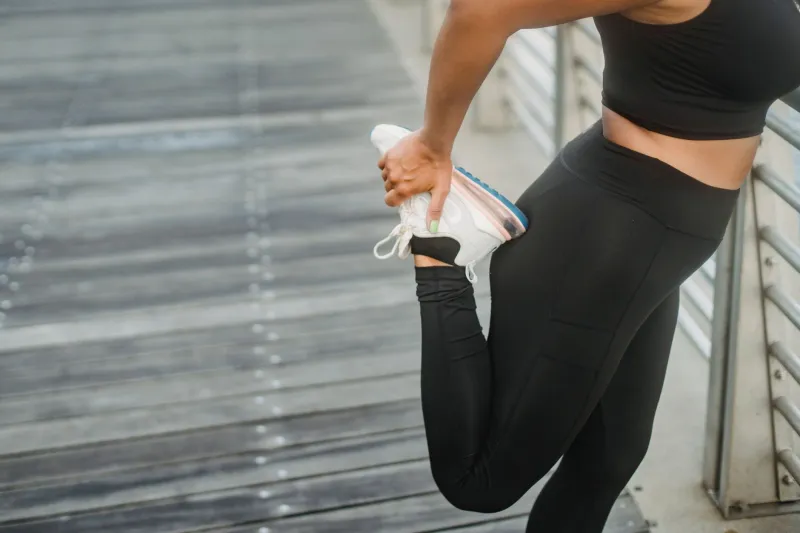
- 10 bodyweight squats or chair squats
- 20 calf raises — this doubles as your vein prevention strategy, since the calf muscle pump is what pushes venous blood back up your legs
- 30 seconds of marching in place or stairwell laps if you have access
Twice a day (5 minutes):
- A brisk loop of the office, hallway, or parking lot. Post-lunch is the ideal slot — this is when a walk meaningfully flattens your glucose curve.
Total commitment: about 20 minutes of movement spread across a workday. No gym, no change of clothes, no leaving your station for more than a few minutes.
The Desk Gear, Ranked by Evidence
The standing desk accessory market is full of promises. Here's how the popular options stack up, from best-supported to most speculative:
1. Footrests (best evidence). A simple footrest — even a slanted board — reduces lower back strain and shifts weight between legs during standing. Occupational health guidelines recommend them for prolonged standing workers. Cheap, boring, effective.
2. Anti-fatigue mats (moderate evidence). These do reduce reported foot and leg discomfort in standing workers, likely by encouraging subtle postural shifts. They don't prevent the venous problems of static standing — they just make standing more tolerable, which can ironically extend the time you stand still.
3. Balance boards (weakest evidence, most interesting). There's very little peer-reviewed research on balance board use at desks. The theory — continuous micro-adjustments keep muscles active and burn more energy — is plausible, and a few small studies show modest increases in energy expenditure and muscle activity. But they require attention, can be distracting during focused work, and long-term injury data doesn't exist. Treat them as an experiment, not a prescription.
Notice what's missing from every tier: anything that replaces actual movement. The gear can make standing more comfortable. It can't make standing into exercise.
The Bottom Line
The standing desk didn't fail you — the promise did. Standing is a posture, not an activity, and your cardiovascular system, your veins, and your muscles all respond to movement, not posture.
Keep the desk if you like it. Alternate it with sitting. Put a footrest under it. But don't let it check the health box, because your legs have been keeping score this whole time — and they know the difference between standing still and moving.
Twenty minutes of squats, calf raises, and hallway laps will do more for you than any $1,200 desk ever will.