Your Thermostat Is a Sleep Supplement: A 7-Night Experiment in Sleeping Slightly Cold
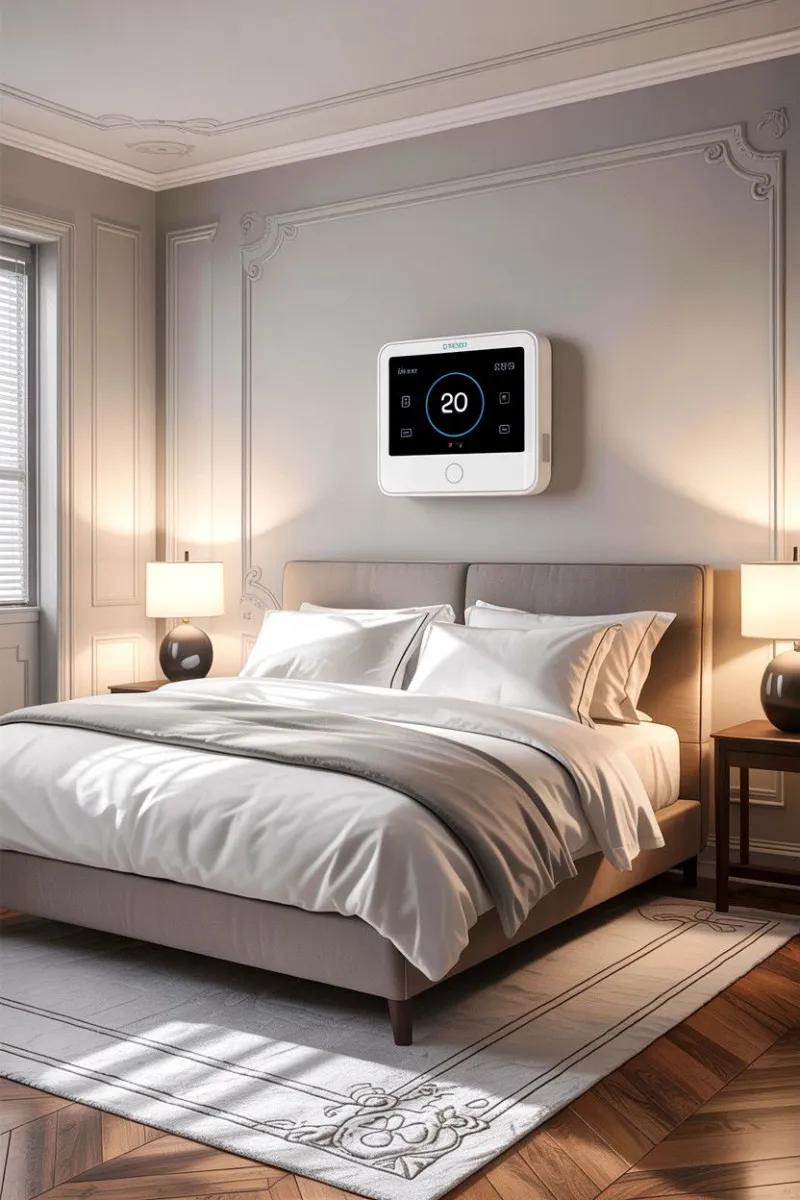
Photo: thermostat on bedroom wall at night cool temperature sleep, via images.oursecondhandhouse.com
Walk down the sleep aisle of any big-box store or scroll through your Instagram feed and you'll meet an entire industry built on one promise: a colder bed. ChiliPads, BedJets, "cooling" mattresses with marketing budgets bigger than some universities' science departments. Americans spend serious money chasing the shiver.
Here's the thing — the underlying science is real. Your body genuinely sleeps deeper in a cooler room. But the price tag on that physiology is often zero dollars and one thumb movement on a thermostat.
Why Your Brain Wants the Window Open
Sleep onset isn't just a mental event — it's a thermal one. To initiate sleep, your core body temperature needs to drop by roughly one degree Fahrenheit (a bit more in Celsius terms). Your body accomplishes this by dilating blood vessels in your hands and feet, dumping heat out through the skin like a radiator opening its valves.
Researchers call this drop your "distal vasodilation," and studies consistently show that the faster and steeper your core temperature falls, the quicker you fall asleep and the more time you spend in slow-wave sleep — the deep, restorative stage where growth hormone release peaks and your brain does its overnight housekeeping.
A bedroom that's too warm fights this process. Your body keeps dumping heat, the room keeps refusing to absorb it, and you end up with lighter, more fragmented sleep — even if you never fully wake up and notice. This is why sleep researchers generally point to a sweet spot somewhere in the mid-60s Fahrenheit for most adults. Not arctic. Not tropical. Just cool enough to let the radiator work.
What the Gadgets Get Right (and Wrong)
To be fair to the cooling-gadget industry: bed-surface cooling does work in studies. Contact with a cool mattress surface can speed that core temperature drop. If you run hot, share a bed with a human furnace, or live in a Phoenix summer without mercy, a device might earn its keep.
But most of us are fighting a simpler battle: ambient air temperature. And air is free to adjust. The gadget solves a problem the thermostat already handles for a lot of people — and it does so at a markup that would make a supplement company blush.
The 7-Night Thermostat Experiment
All you need is a thermostat you control and, ideally, some way to track sleep — a wearable, a ring, even a journal rating your mornings. Here's the protocol:
Nights 1–2 (Baseline): Leave your bedroom at whatever temperature is normal for you. Write down the setting. In the morning, note your sleep tracker's deep sleep minutes, or just rate how rested you feel from 1 to 10.
Nights 3–4 (Minus 3 Degrees): Drop the thermostat three degrees below baseline. If your room is usually 72, aim for 69. Keep everything else constant — same bedtime, same evening screen habits, same caffeine cutoff.
Nights 5–6 (Minus 3 More): Go another three degrees down. Around this point many people discover their ideal range sits somewhere between 63 and 68°F.
Night 7 (Verdict): Revisit whichever setting gave you the best deep sleep or morning rating, and camp there.
A few practical notes. If you share a bed, this becomes a negotiation, not a decree — a fan pointed away from your partner achieves a similar microclimate. If your hands and feet are cold at bedtime, that's actually counterproductive: warm feet speed the core temperature drop, so socks are fair game even in a cool room. And if you wake up shivering, you've gone too far; back up a couple degrees. The goal is cool, not cold.
The Caveats Worth Knowing
Sleep trackers are decent at spotting trends and mediocre at measuring exact deep sleep minutes. Treat the numbers as a relative signal, not gospel. Age matters too — older adults often tolerate and even prefer slightly warmer rooms, so let your own data overrule the textbook number. And if you have a condition like Raynaud's, or night sweats that predate any of this, talk to a doctor rather than a blog post (even this one).
The Bottom Line
Thermal regulation is one of the few levers of sleep quality that's genuinely under your direct control tonight, unlike stress or hormones or a noisy neighbor. The deep-sleep benefit of a cooler bedroom is well-documented physiology, not wellness marketing.
So before you add another gadget to the cart, run the week. A thermostat, a tracker, and seven nights might tell you more than a $400 mattress topper ever will — and worst case, you've saved yourself some money and a slightly lower electric bill.