That 3 P.M. Zombie Feeling? Your Lunch Is Probably the Culprit
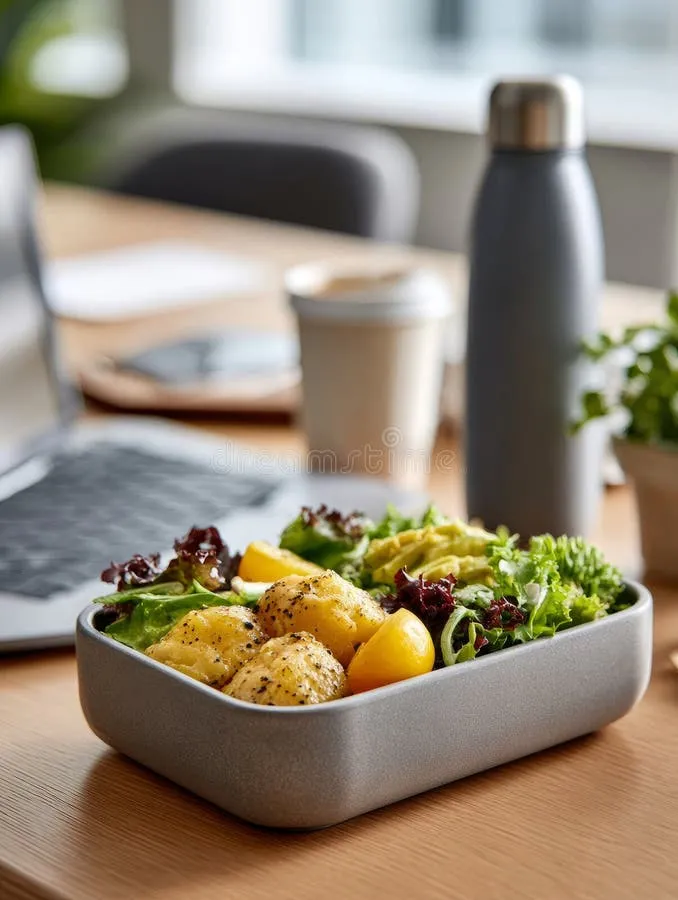
Photo: healthy grain bowl lunch salad on desk office, via thumbs.dreamstime.com
Let's get something out of the way: the 3 p.m. crash is not a law of nature. It's not 'just getting older.' It's not something you fix with a fourth coffee and a bag of pretzels from the office vending machine.
It's data. Your body is sending you a very readable signal about what happened at lunch — and most of us are misreading it entirely.
The Glucose Rollercoaster, Explained
When you eat a carb-heavy meal, your blood sugar rises. Your pancreas responds by releasing insulin to shuttle that glucose into cells. In many people — especially after refined carbs eaten without protein, fat, or fiber — insulin overshoots, and blood sugar drops below baseline a couple of hours later. Researchers call it reactive hypoglycemia or post-meal glucose dip. You call it 'why can't I keep my eyes open in this meeting.'
A 2022 study published in Nutrients using continuous glucose monitors found that participants who experienced larger post-lunch glucose dips reported measurably more fatigue and cravings in the hours that followed. The crash isn't in your head. It's on your continuous glucose monitor.
Plot Twist: Your 'Healthy' Lunch Might Be the Problem
Here's the contrarian part. The smoothie you ordered because it has spinach in it? A large fruit-heavy smoothie can deliver 50+ grams of sugar with almost no chewing, no fiber structure, and nothing to slow absorption. Your bloodstream sees it a lot like juice.
That grain bowl at the fast-casual spot? Depends entirely on the build. White rice base, honey-glazed protein, teriyaki sauce, and a sprinkle of quinoa for decoration is a glucose spike wearing a wellness costume.
The issue is almost never 'carbs are bad.' It's carbs in isolation, in liquid form, or in unmarked quantities.
The Hack: Eat Your Meal in Reverse
This is the experiment worth running tomorrow, and it costs you nothing. Research on 'meal sequencing' — including studies out of Weill Cornell Medicine — suggests that eating vegetables and protein before starches can meaningfully blunt the post-meal glucose spike.
The protocol:
- Fiber first. Start with the vegetables or a side salad. Fiber slows gastric emptying and glucose absorption.
- Protein and fat second. Chicken, salmon, eggs, beans, olive oil — these further slow digestion.
- Carbs last. By the time the rice or bread shows up, your system is already buffered.
In one small trial, this ordering reduced post-meal glucose peaks significantly compared to eating the same foods together or carbs-first. Same meal. Different outcome.
Three More Free Upgrades
- Add a 10-minute walk after lunch. Your muscles soak up glucose without needing much insulin. This might be the single most underrated metabolic habit in America.
- Chew, don't drink. Swap the smoothie for the actual fruit. The fiber structure matters.
- Watch the 'healthy' sauces. Dressings and glazes are where grain bowls go to die. Ask for them on the side.
Try It, Then Decide
We're not asking you to take our word for it. Run the experiment: tomorrow, eat your usual lunch. Note your energy at 3 p.m. The day after, eat the same meal — sequenced, fiber first — and take a short walk after. Compare notes.
If your afternoon transforms, you've just learned something a CGM could've told you for $300: the 3 p.m. crash was never your destiny. It was your lunch, talking.